
Ingredient basics
What Is Sucralose? Sweetness, Calories and Uses
Learn what sucralose is, how pure powder differs from retail blends, and what to check for sugar replacement, heating and finished-product labels.
Sucralose is an artificial high-intensity sweetener, also known as E955, used to provide sweetness in very small amounts. It is different from table sugar, stevia and sugar alcohols such as erythritol. FDA describes its sweetness as about 600 times that of table sugar; this is a reference comparison, not a universal recipe conversion.
If you are reading a food label or replacing sugar in a product, first establish whether “sucralose” means the sweetening ingredient itself or a prepared blend. That distinction changes how much powder to use, what else enters the recipe and how to read the nutrition information.
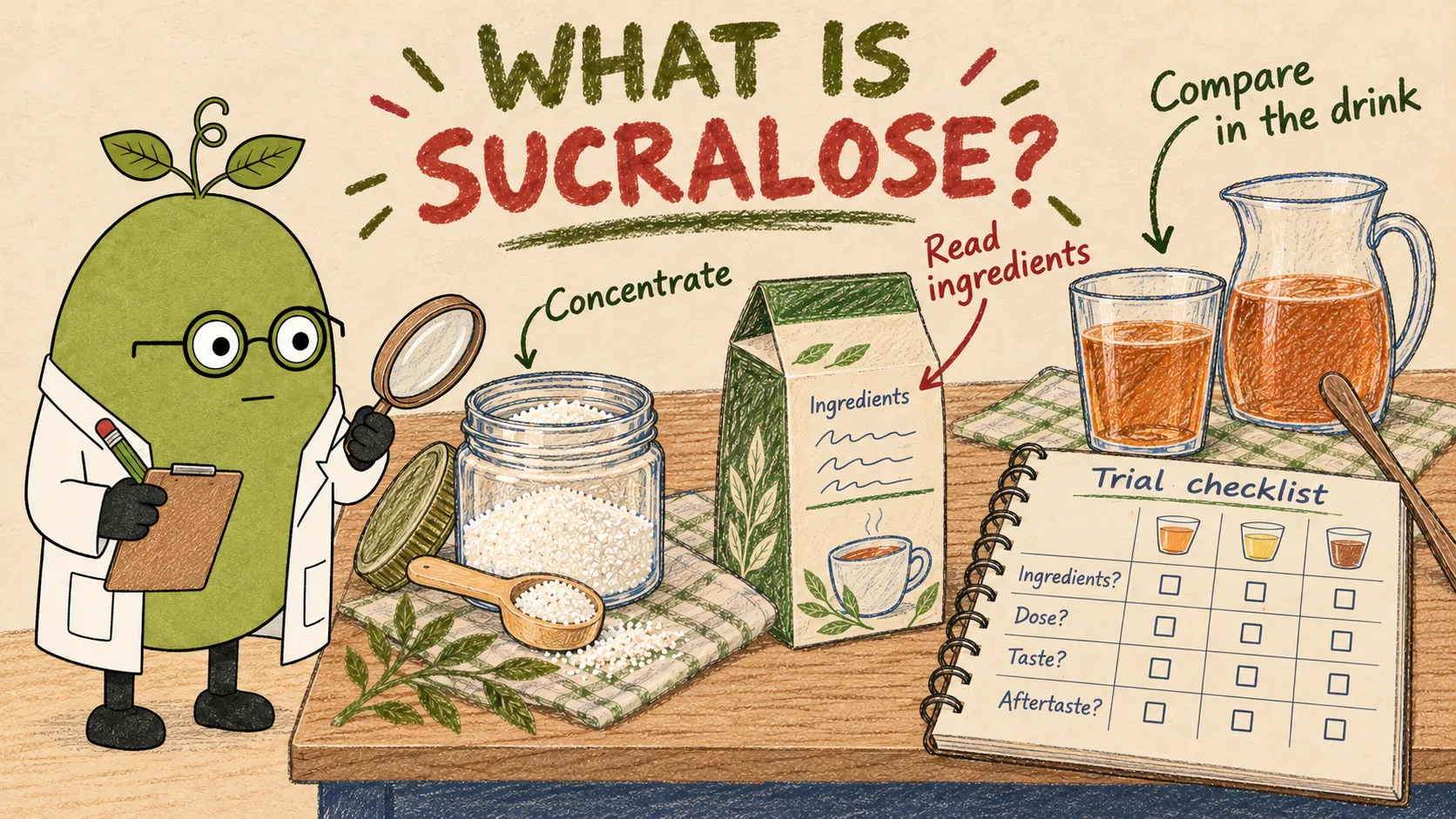
Is sucralose sugar, stevia or a sugar alcohol?
These names describe different ingredients. Sucrose is ordinary table sugar. Sucralose is a manufactured high-intensity sweetener; stevia sweetening ingredients contain steviol glycosides. Erythritol is a sugar alcohol that also contributes ingredient mass. A blend may combine more than one of these. For a packet or spoonable product, read the full ingredient list. The front-of-pack sweetener name alone does not establish the complete composition. If a recipe calls for a branded blend, do not substitute the same weight of concentrated sucralose.
What is sucralose made from, and what does E955 mean?
Sucralose is made by chemically modifying sucrose, the sugar used at the table. Three selected hydroxyl groups are replaced with chlorine atoms, producing a different compound. It is a manufactured sweetener, not a natural sugar or a stevia extract. Starting with sucrose does not make the resulting ingredient ordinary sugar. E955 is its EU food-additive identifier; INS 955 is the corresponding international numbering designation. These codes identify the ingredient, not the complete composition of a sweetener packet. They also do not establish permission for every food category in every country.
How long does sucralose taste sweet?
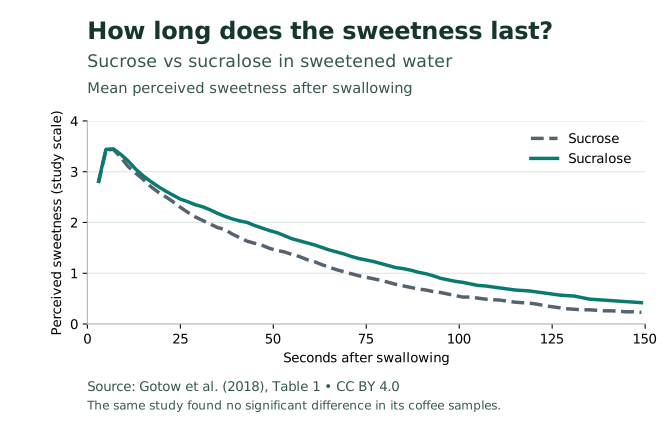
In Gotow and colleagues’ study, participants rated the sweetness that remained after swallowing. Sucralose-sweetened water had higher sweetness ratings than sucrose-sweetened water in the study’s time windows from 25 to 149 seconds. The coffee samples showed no significant difference between the sweeteners under the study conditions. If the finish matters, compare the candidates in your actual drink.
What do commercial products blend with sucralose?
A bottle of sugar-free soda and a spoonable sweetener ask different things of the formula. Some drinks combine high-intensity sweeteners and leave the rest of the recipe to supply body. Granules, syrups and sauces may pair sucralose with an ingredient that also adds bulk or soluble solids. The examples below come from individual product labels or brand ingredient disclosures.
- Torani sugar-free syrup FAQ
- Coca-Cola Philippines: Royal drink labels
- PepsiCo: Diet Mountain Dew 500 mL label
- MGP Hydration Drink ingredients by flavor
- LEVity sparkling protein water ingredients and quantities
- Incauca Vital granules
- Monin Glacier Clear beverage concentrate
- Torani vanilla liquid drink enhancer
- Splenda Multi-Use Syrup
- Monin U.S. syrup FAQ
- Splenda Sugar Blend
- Monin dark chocolate sauce ingredients
- Mentos Pure Fresh Fresh Mint label
| Sweetener combination | Commercial example | What to compare |
|---|---|---|
| Sucralose + acesulfame potassium (Ace-K) | Torani Sugar Free Syrups and Royal Zero Sugar (Philippines). | Compare with sucralose alone at similar sweetness. Taste the first sip and check for bitterness and lingering sweetness. |
| Sucralose + Ace-K + aspartame | Diet Mountain Dew, U.S. 500 mL bottle label. | The label identifies three high-intensity sweeteners. Their individual amounts are undisclosed. |
| Sucralose + steviol glycosides | MGP Apple Hydration Drink uses stevia leaf-derived glycosides. LEVity Pineapple & Mint Sparkling Protein Water uses fermentation-derived glycosides. | Record which glycosides you use before comparing bitterness and the finish. |
| Sucralose + erythritol | Incauca Vital granules and Monin Glacier Clear beverage concentrate. | Erythritol adds bulk in granules. In a frozen product, check cooling and look for crystals after storage. |
| Sucralose + erythritol + Ace-K | Torani Sugar Free Vanilla Liquid Drink Enhancer. | Taste the concentrate at the dilution used for serving. |
| Sucralose + allulose | Splenda Multi-Use Syrup and the Monin U.S. sugar-free syrup range described in its FAQ. | Allulose syrup supplies soluble solids. Compare sweetness and thickness separately. |
| Sucralose + sugar | Splenda Sugar Blend for baking. | The product retains some sugar. Its 2:1 claim compares finished blend sweetness with sugar. Ingredient proportions are undisclosed. |
| Sucralose + sugar + Ace-K + monk fruit extract | Royal Tru-Strawberry in the Philippines. | The label shows these ingredients in one drink. It gives no amount for the monk fruit extract. |
| Sucralose + several polyols and other high-intensity sweeteners | Monin Sugar Free Dark Chocolate Sauce lists maltitol syrup, sorbitol and Ace-K alongside sucralose. Mentos Pure Fresh Fresh Mint gum lists xylitol, sorbitol, mannitol and maltitol syrup, plus aspartame and Ace-K. | Check thickness in the sauce. In gum, record how the sweetness changes over the chewing period. |
Which published numbers are actual ingredient amounts?
Finished drink. LEVity’s Pineapple & Mint Sparkling Protein Water lists 9.26 mg of sucralose and 0.56 mg of fermentation-derived steviol glycosides per 100 mL. That is about 16.5 parts sucralose to one part steviol glycosides by mass in this drink. Patent example. A Coca-Cola patent application describes a hydration beverage with about 90–95 ppm sucralose and 45–50 ppm monk fruit extract containing about 50% mogroside V. These are disclosed patent amounts. The Royal retail label does not give those quantities. Carrier premix. The UK Splenda Granulated ingredient list gives 1% sucralose with maltodextrin. This percentage is the sucralose content of the tabletop product, which can be measured by the spoon. It does not give the finished beverage dose.
How to choose the first blend to test
If the body is already right and the sweetness starts too slowly or lingers too long, compare two sweetener routes in the same base. Keep the serving temperature and dilution steady, and bring the samples to similar perceived sweetness before judging the first taste and the finish. If removing sugar leaves a thin drink, a runny syrup or a changed frozen texture, test the ingredient that restores solids as well. Check the finished product after its normal processing and storage, alongside the original recipe.
Does sucralose have calories or carbohydrates?
Pure sucralose supplies sweetness without calories, as described in EFSA’s ingredient overview. A sucralose-containing product can still supply carbohydrate and energy from its other ingredients. The name of the sweetener cannot tell you the nutrition of a biscuit, milk drink or tabletop blend. For example, the US Splenda Original Sweetener Packets product lists dextrose, maltodextrin and sucralose. Dextrose and maltodextrin are carbohydrate ingredients used in the prepared product. This example describes that particular product, not every Splenda product or every country’s version. Compare the actual serving you use and the full ingredient list. A declaration per small packet and a value per 100 g use different quantities; do not treat them as interchangeable. For a manufacturing project, calculate the complete formula from verified ingredient data and apply the destination-market labeling rules.
Is sucralose the same as Splenda, and what about a keto diet?
Sucralose is an ingredient name; Splenda is a brand with several product lines. Choose the exact product before comparing ingredients, carbohydrate per serving or sugar-conversion instructions. A direction for a diluted packet or spoonable blend does not apply to concentrated sucralose powder. For a low-carbohydrate or ketogenic diet, assess the carbohydrate in the complete product and the amount actually consumed. The presence of sucralose alone does not establish that a food fits your carbohydrate allowance or will maintain ketosis. A product containing dextrose, maltodextrin, sugar or other ingredients needs its own serving-based review.
How much sucralose replaces sugar?
A sweetness comparison cannot replace a product trial. Replacing sugar changes both sweetness and the amount of material in the recipe. Concentrated sucralose supplies sweetness at a small dose; it does not restore all the mass removed with sugar. A spoonable blend has its own dilution and conversion instructions. For a drink trial, hold the base, serving temperature and preparation method steady. Compare the control with clearly recorded doses, then assess sweetness, flavour balance and aftertaste. For a dry mix, also check accurate weighing and distribution through the batch. Never apply a retail cup-for-cup conversion to pure ingredient powder.
Can sucralose be used in drinks and baking?
Beverages, tabletop sweeteners and other foods can contain sucralose. Suitability depends on the finished product and permitted use. For ready-to-drink development, compare the actual base before and after your process and during the intended storage period. One successful fresh sample does not establish shelf life. Heating needs a more careful answer than “heat stable.” EFSA’s February 2026 assessment found no safety concern for currently authorised uses, but could not confirm the proposed extension to fine bakery wares because of uncertainties under prolonged high-temperature conditions. It also identified uncertainty for domestic baking or frying. Do not turn sweetness retention into blanket approval for every baking process.
Is sucralose safe, and is it permitted everywhere?
Safety assessments concern defined uses and exposure, rather than an unlimited amount or every possible preparation. FDA permits sucralose under specified conditions in the United States. EFSA evaluates safety for the EU; an EFSA opinion and a legal use authorisation serve different roles. For an international product, check the current destination-market additive rules for the exact food category and use level. Keep that decision separate from claims such as sugar-free, reduced sugar or suitable for a particular medical condition. This ingredient overview does not establish a treatment or weight-loss benefit.
What should you read next?
For general understanding, start with this overview. For a specific question, continue to the comparison, heating or application guide below. If you are selecting material for manufacturing, the buying guide covers specifications, physical form and sample documents.
Common questions
Is sucralose the same as sugar?
No. Sucralose is a high-intensity sweetener. A much smaller amount provides sweetness, so replacing sugar also requires checking the mass and other functions removed from the recipe.
Is sucralose a sugar alcohol?
No. Erythritol is a sugar alcohol; sucralose is a different type of sweetener. They can occur together in a prepared blend.
Does every sucralose product contain the same ingredients?
No. Check the full ingredient list and product instructions. Concentrated ingredient powder and diluted tabletop blends require different doses.
Can I use the 600-times figure as a final recipe?
No. It is a reference sweetness comparison. Confirm the dose, flavour, process and permitted use in the actual finished product.
Is E955 the same as sucralose?
Yes. E955 identifies sucralose in the EU additive numbering system. It does not describe every other ingredient in a prepared sweetener product.
Is sucralose natural?
No. It is an artificial sweetener made by chemically modifying sucrose. A sugar starting material does not make the final ingredient ordinary sugar or a plant extract.